The challenge
Make several independent gameplay systems work together in a complete, understandable objective loop.
A third-person sci-fi escape prototype. Collect 3 energy cores, activate 3 terminals and reach the exit in 150 seconds.
Make several independent gameplay systems work together in a complete, understandable objective loop.
Reusable Blueprint Actors report objective events to a central GameMode. UMG presents progress, while a Data Table holds the rules.
A stable playable loop, from the main menu to victory or defeat, with replay and saved master-volume settings.
I implemented the gameplay logic, objectives, input, UI integration, configuration and settings persistence. I adapted and tested the gameplay in an existing modular sci-fi environment.
Recorded in Unreal Engine. This 86-second edit shows exploration, core collection, terminal interaction and the escape sequence.
An Enhanced Input action mapped to E checks the nearby terminal. A one-time activation path prevents repeat counting. Core pickups use player overlap instead. This keeps the two interactions distinct and predictable.
OnCoreCollected and OnTerminalActivated report progress to the GameMode. It owns the countdown and objective counts, checks the exit requirement, and selects victory or defeat. Reaching the exit after completing both objectives wins the game.
The required cores, terminals and time limit are data-driven. The documented v1.0 configuration uses 3 cores, 3 terminals and 150 seconds, allowing rule changes without rebuilding the objective logic.
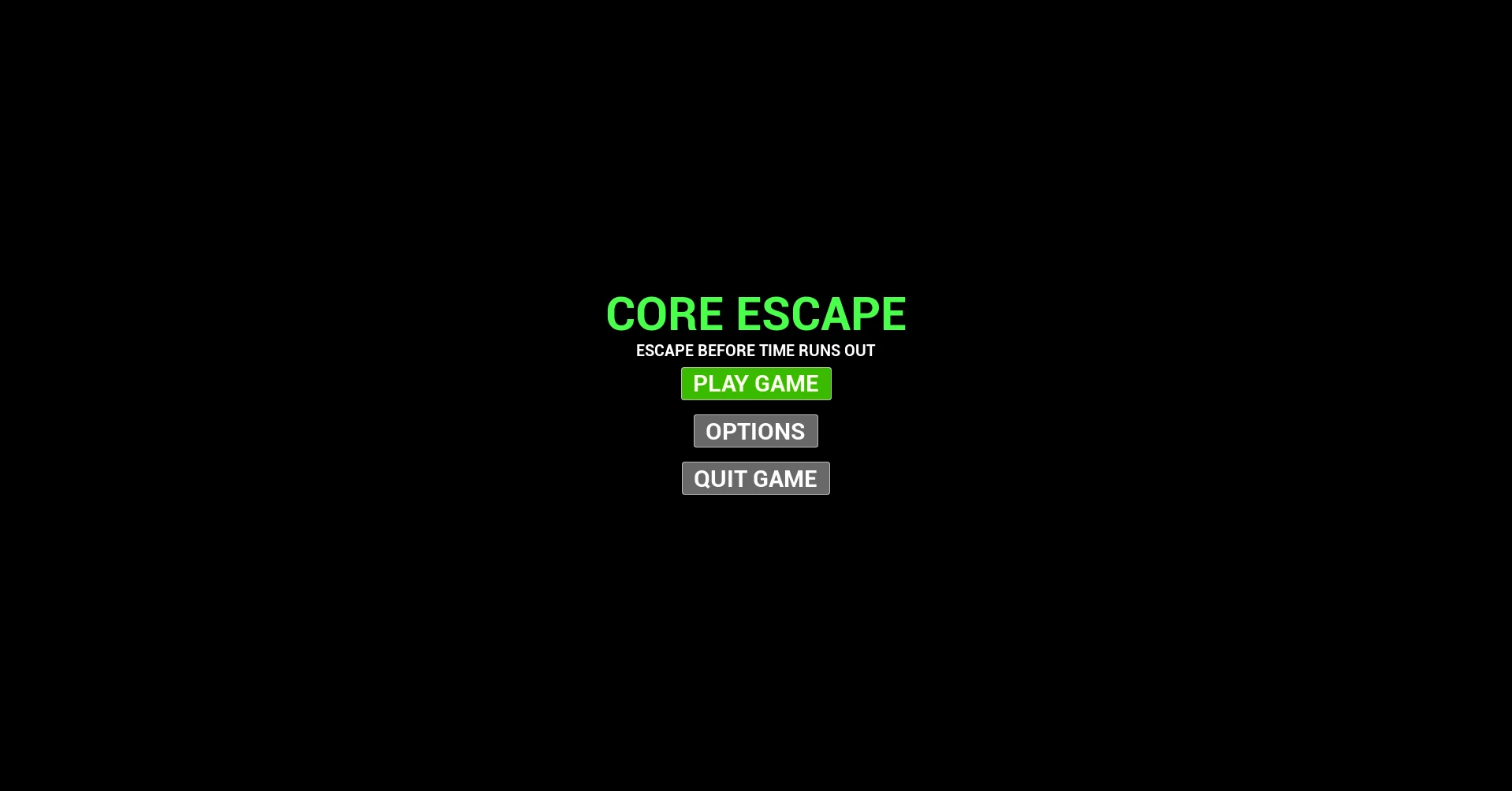
The main menu, options, live HUD and end screens support a full play-and-replay flow. The master-volume slider uses Sound Class / Sound Mix control; GameInstance and SG_CoreEscapeSettings restore the selected value when the game reopens.
I placed gameplay objectives and the escape route in the supplied sci-fi level, then iterated on lighting, materials and post-processing. Lumen and Virtual Shadow Maps are part of the setup; performance optimization remains a future polish task.
A 1 min 58 sec walkthrough of the original Core Escape editor captures, with English explanations and optional Portuguese subtitles.
These screenshots document several development stages, including debug messages and intermediate iterations. They show how the systems were built; the gameplay video demonstrates the final v1.0 loop. Select a capture to inspect the full image.
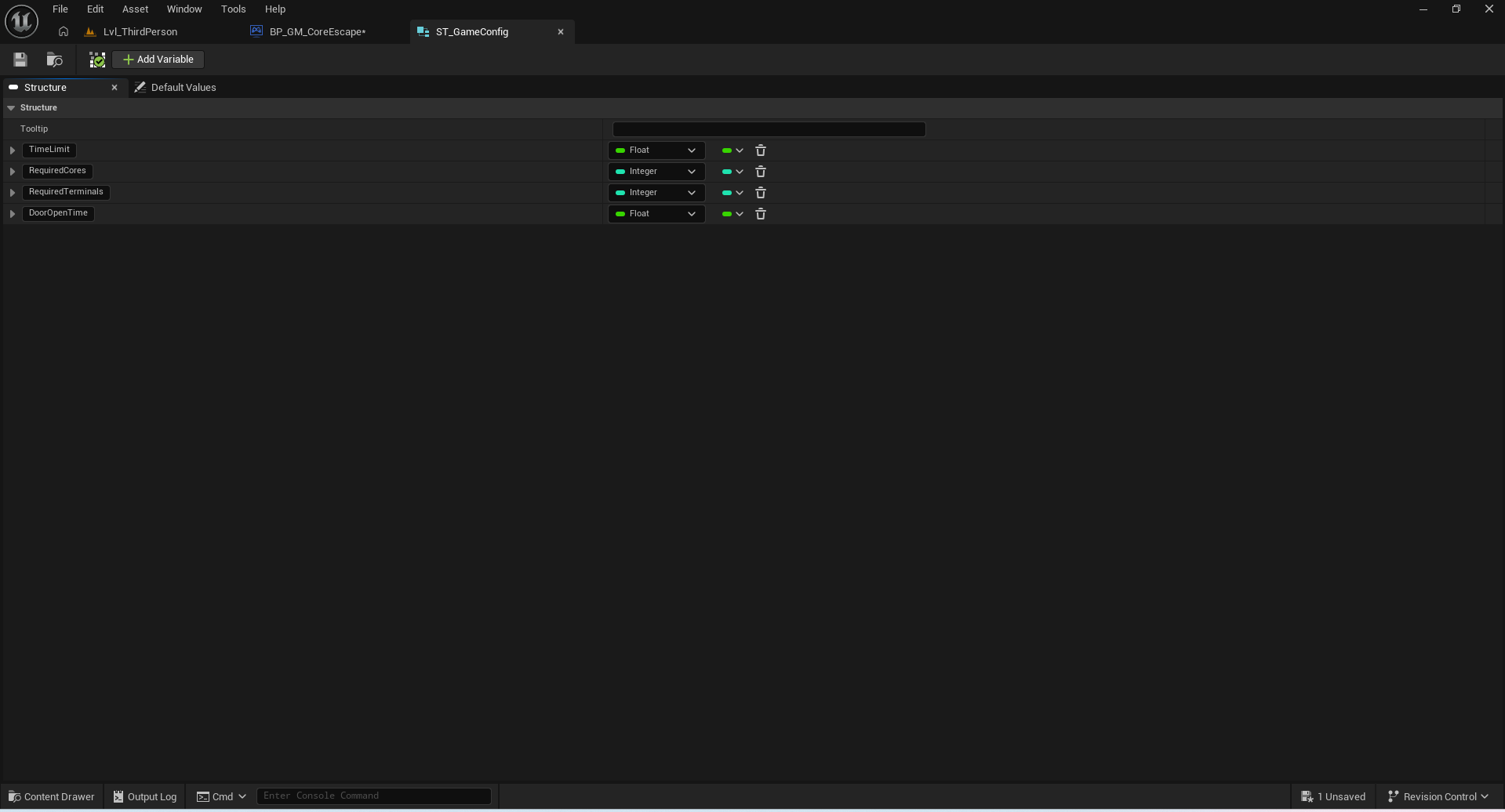
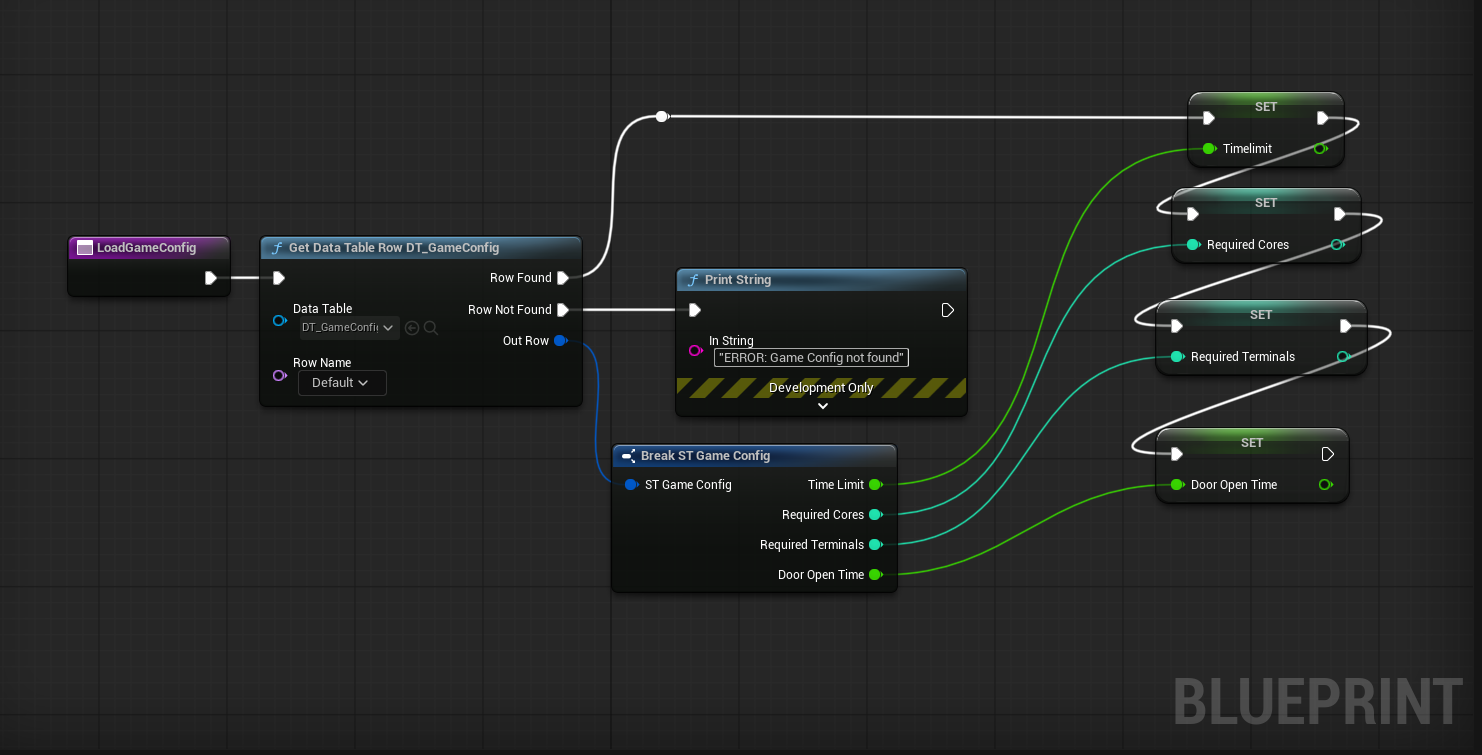
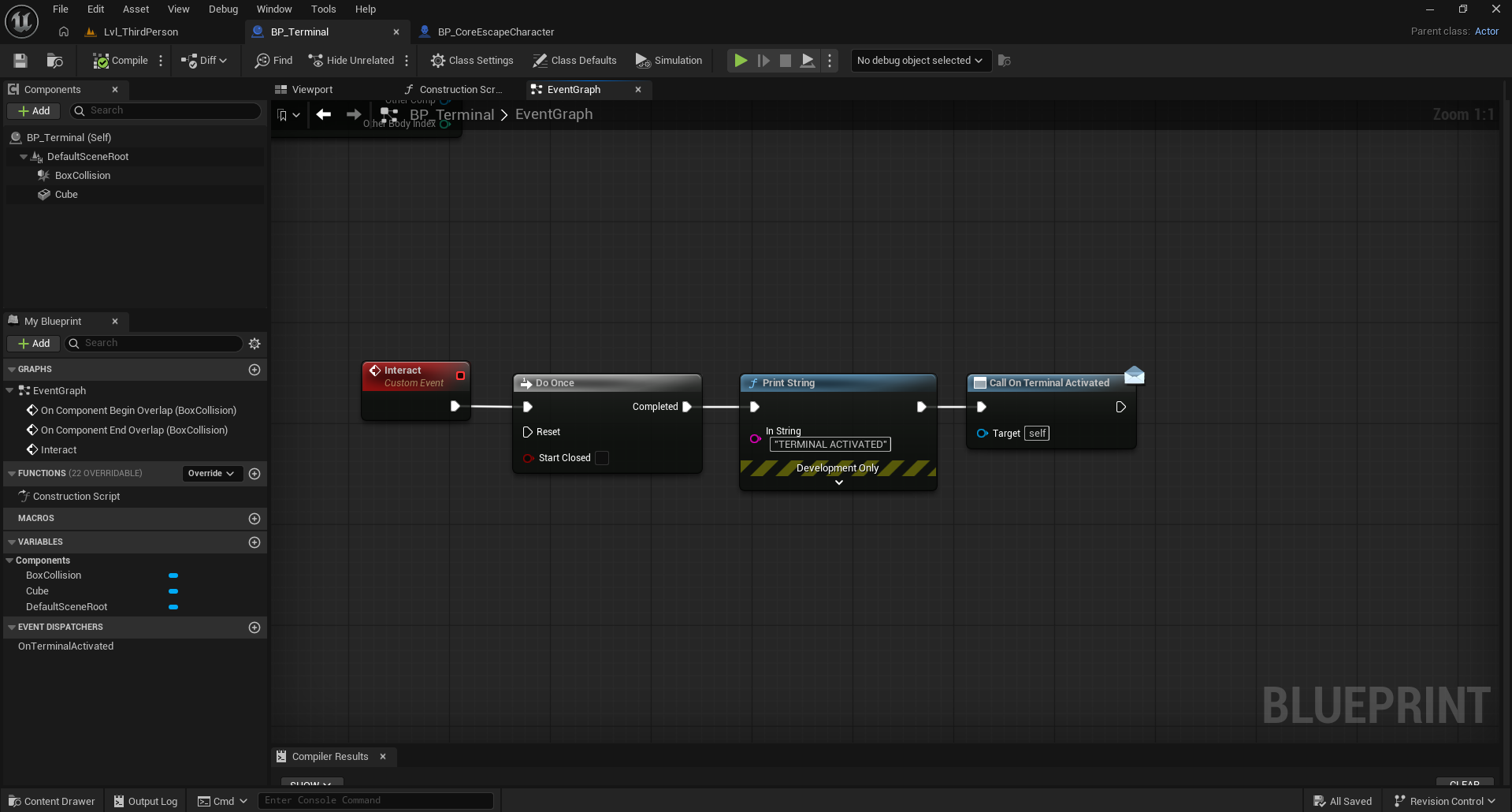
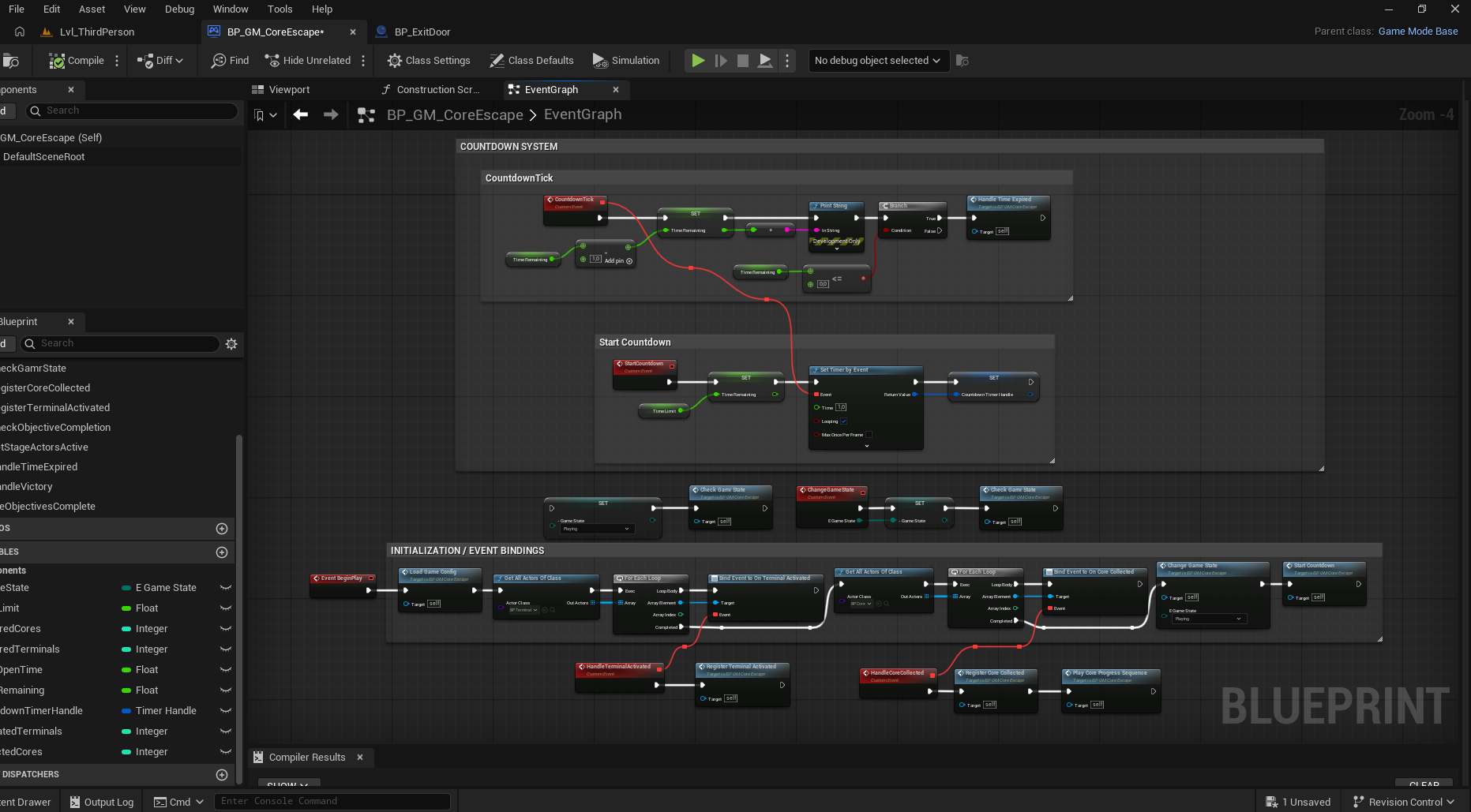
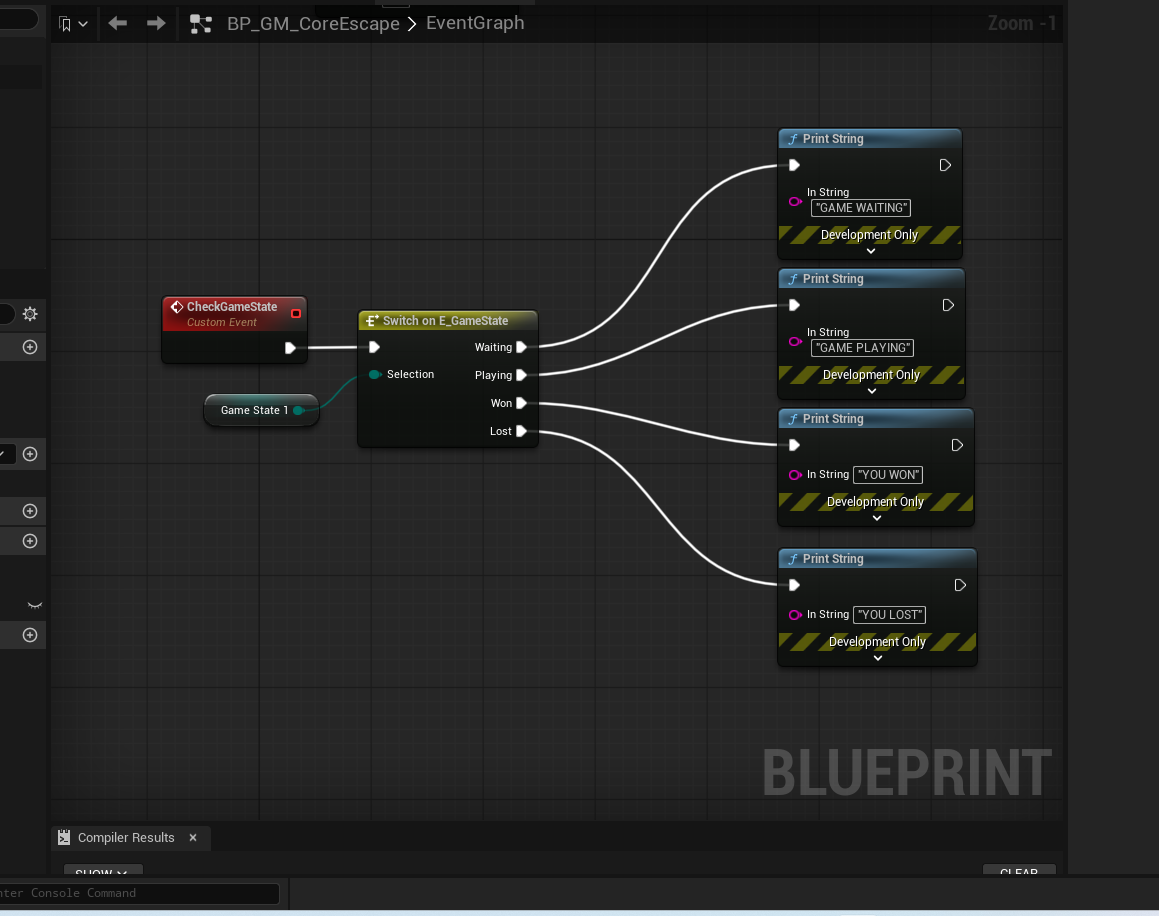
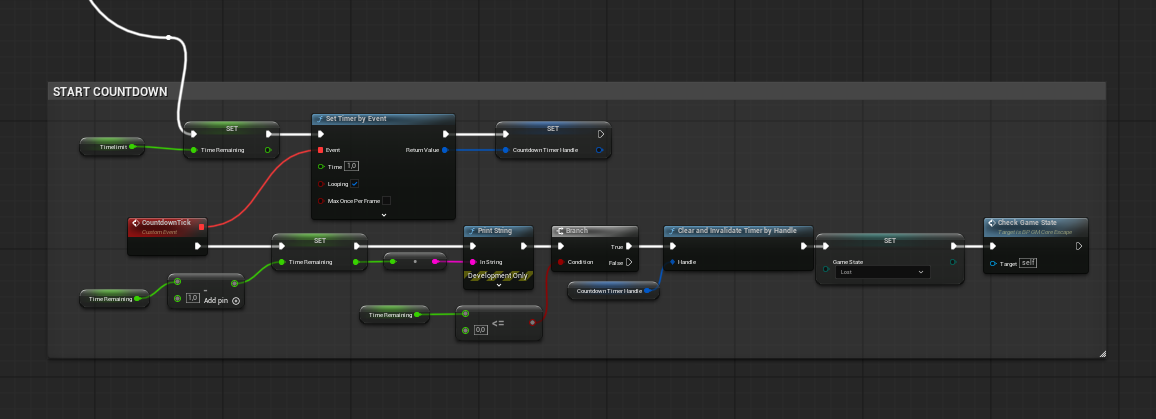
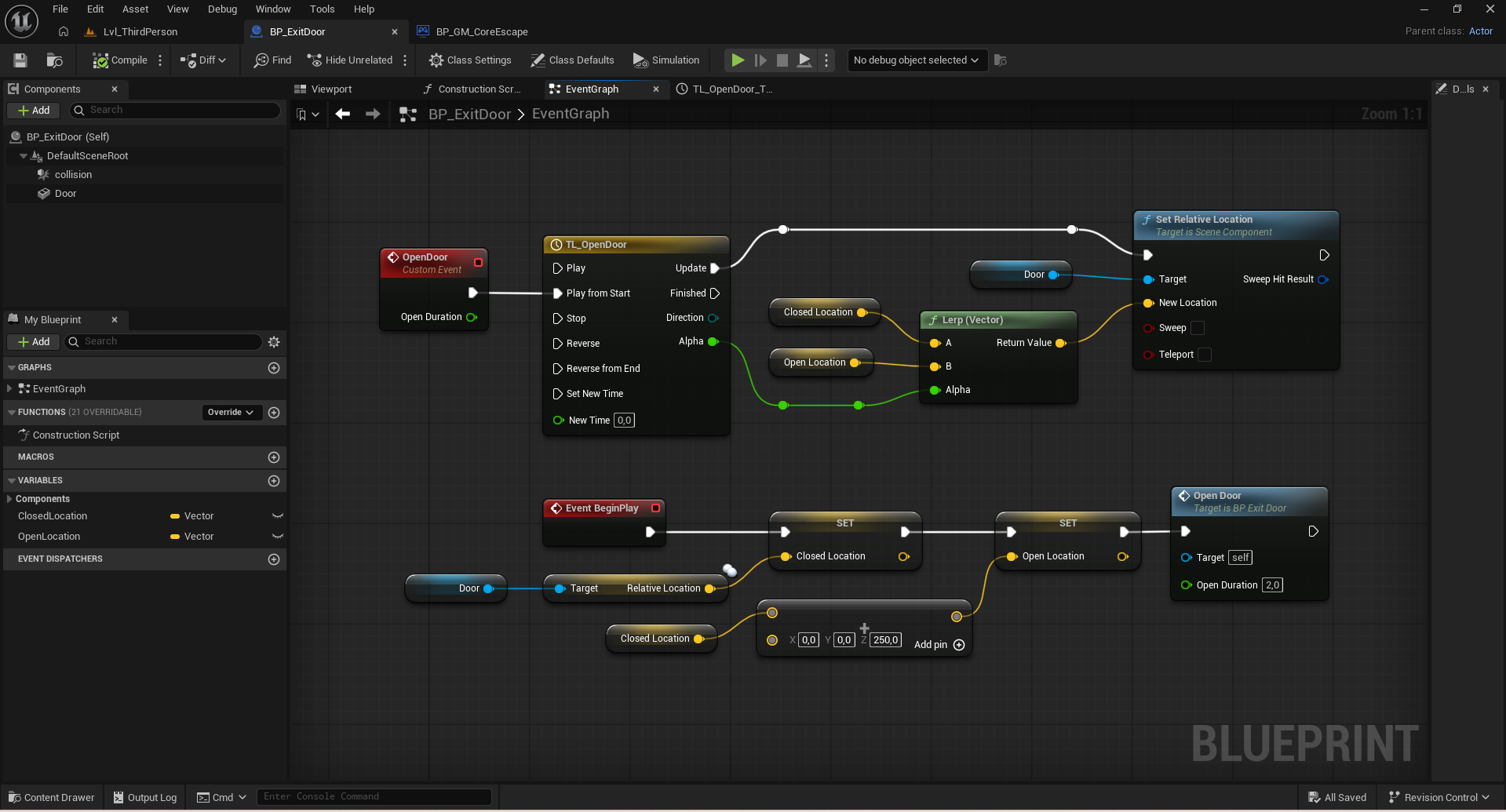
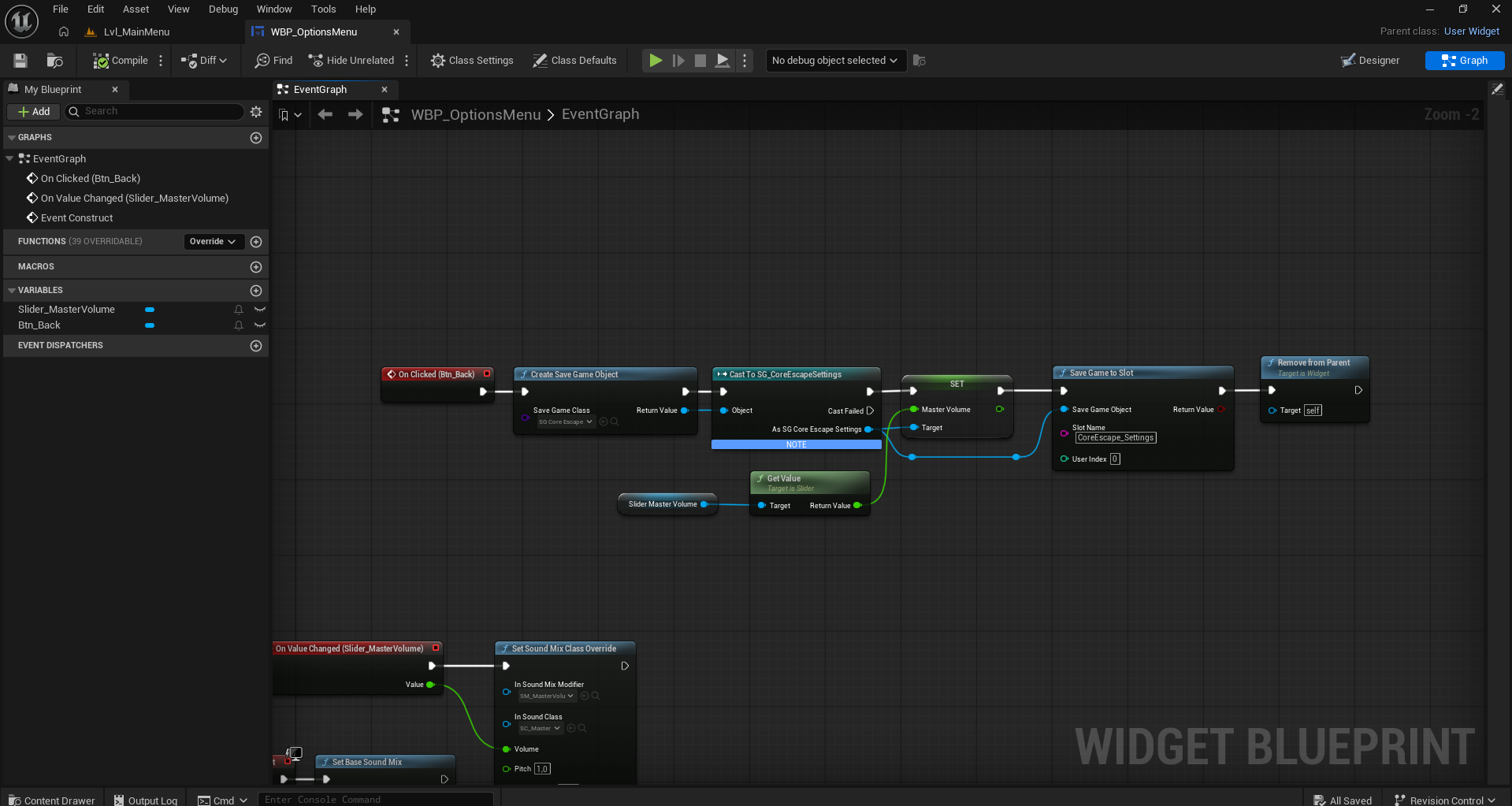
Select any image to explore.
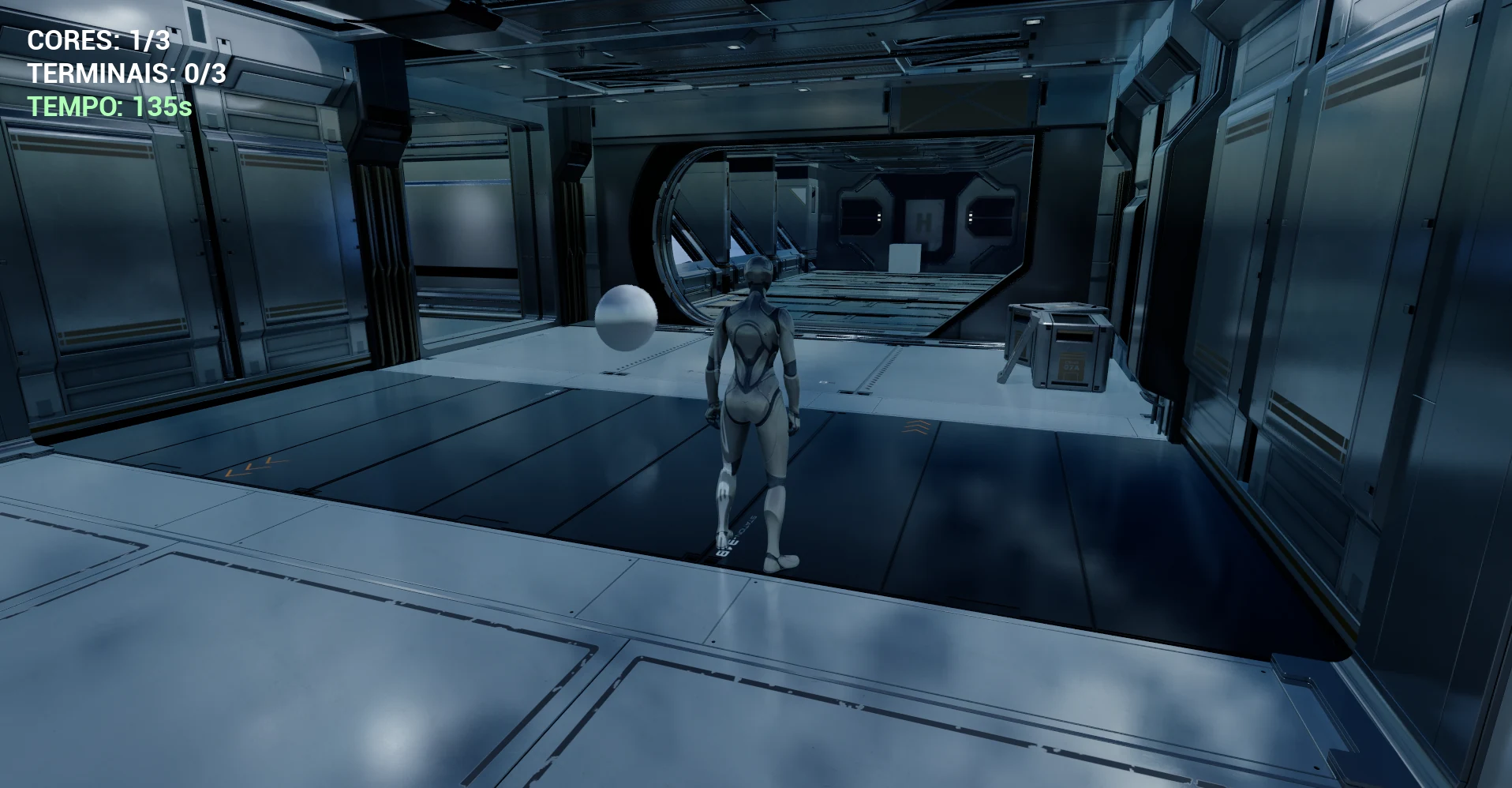
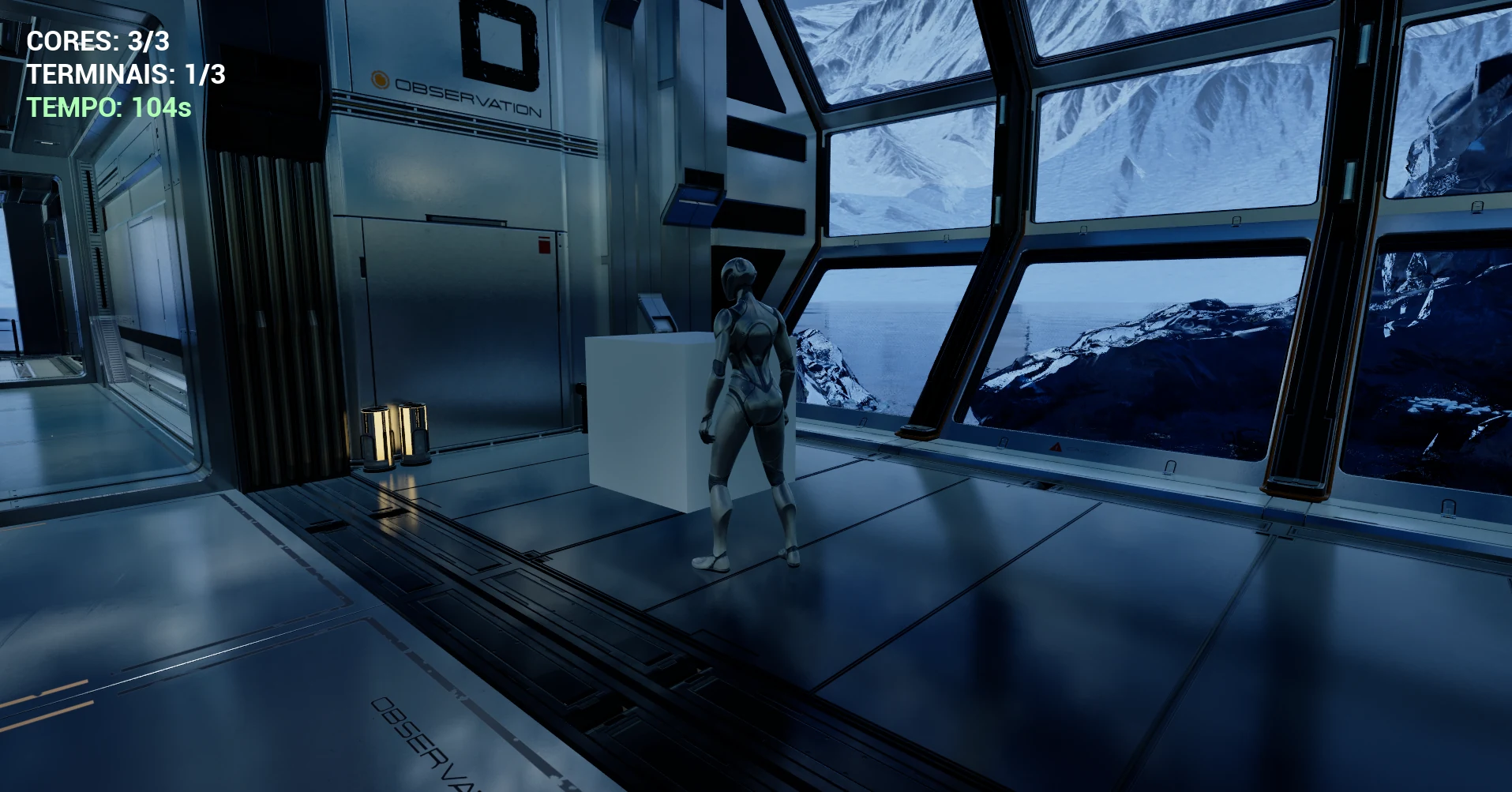
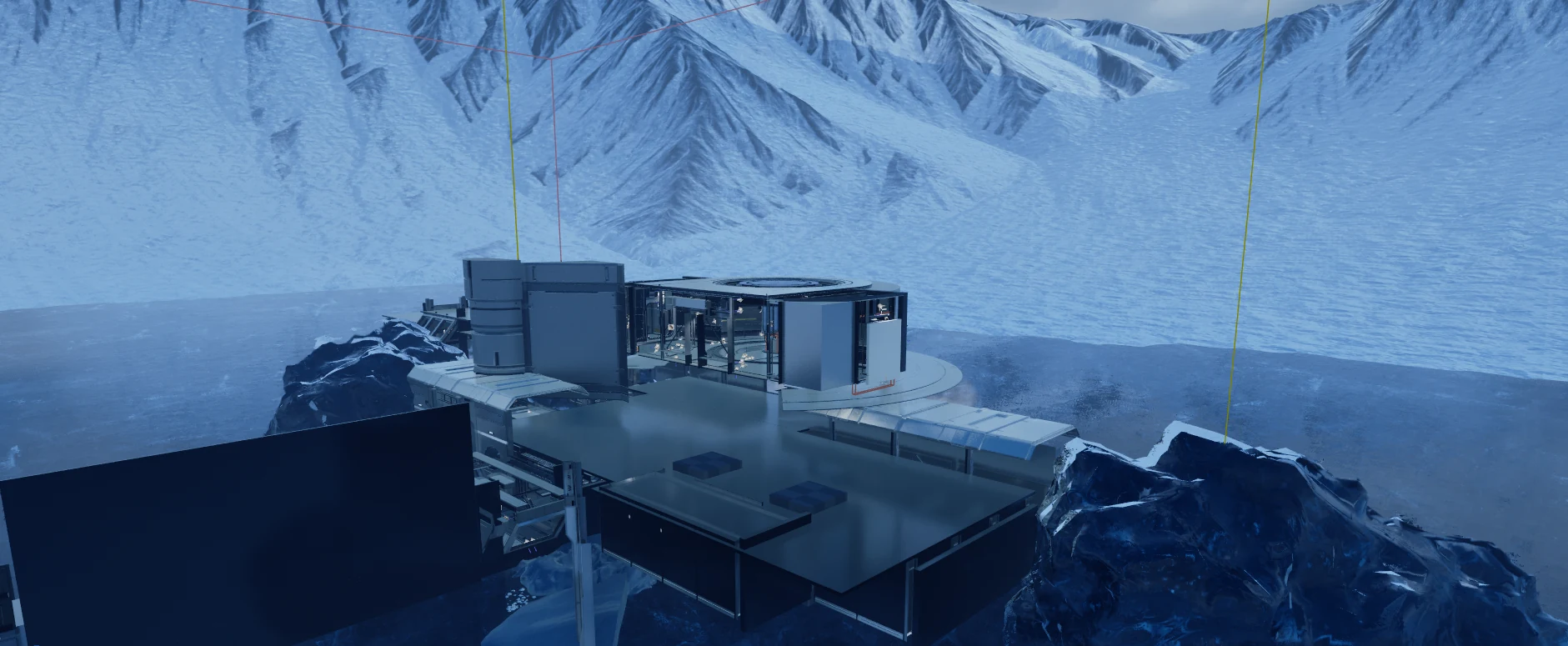

Further polish: replace placeholder interactable visuals and investigate Virtual Shadow Maps performance warnings. The repository contains showcase media and documentation, without a standalone build or full Unreal project.
Gameplay and adaptation by Lucas Hoelzle. Modular SciFi Season 1 Starter Bundle by Jonathon Frederick supplies the primary environment and arctic scenery. Sci FI Hallway Asset Pack by Apoc was imported/evaluated during development. Character foundation: Epic Games Third Person template.