The challenge
Learn individual mechanics, understand how their nodes work and combine them into one playable level.
A progressive Blueprint learning project. Platforms, interaction, damage, checkpoints, respawn and HUD come together in a playable first-person level.
Learn individual mechanics, understand how their nodes work and combine them into one playable level.
Twelve progressive modules cover movement, doors, pickups, health, interaction, scripted patrol, checkpoints and UI.
A small playable scenario that connects reusable mechanics with player feedback, checkpoint storage and respawn.
I built the progressive Blueprint exercises and integrated the mechanics in the Mini Gameplay level. My focus was understanding execution flow, references, collision events and how systems communicate.
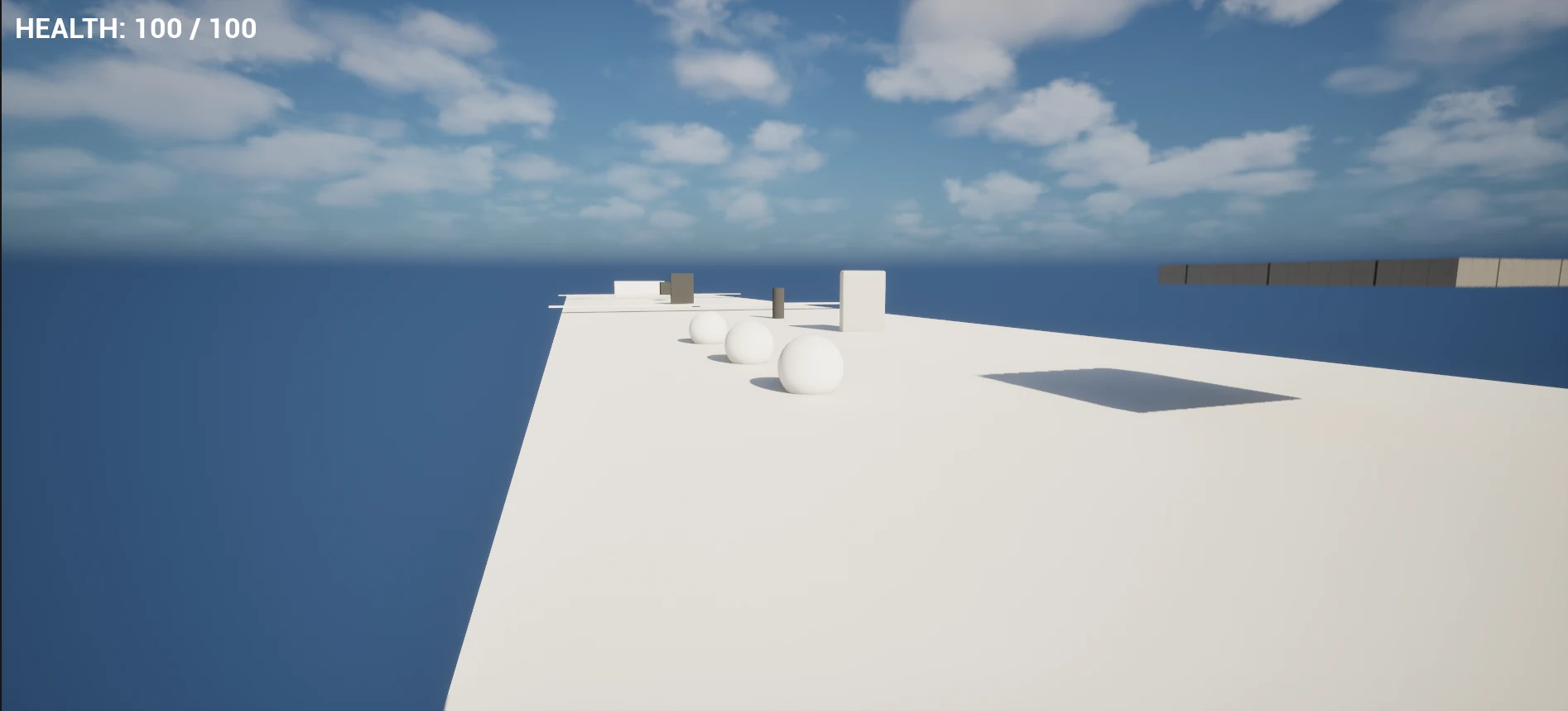
A short, silent gameplay preview converted from the original project GIF. The screenshots below document the underlying Blueprint systems.
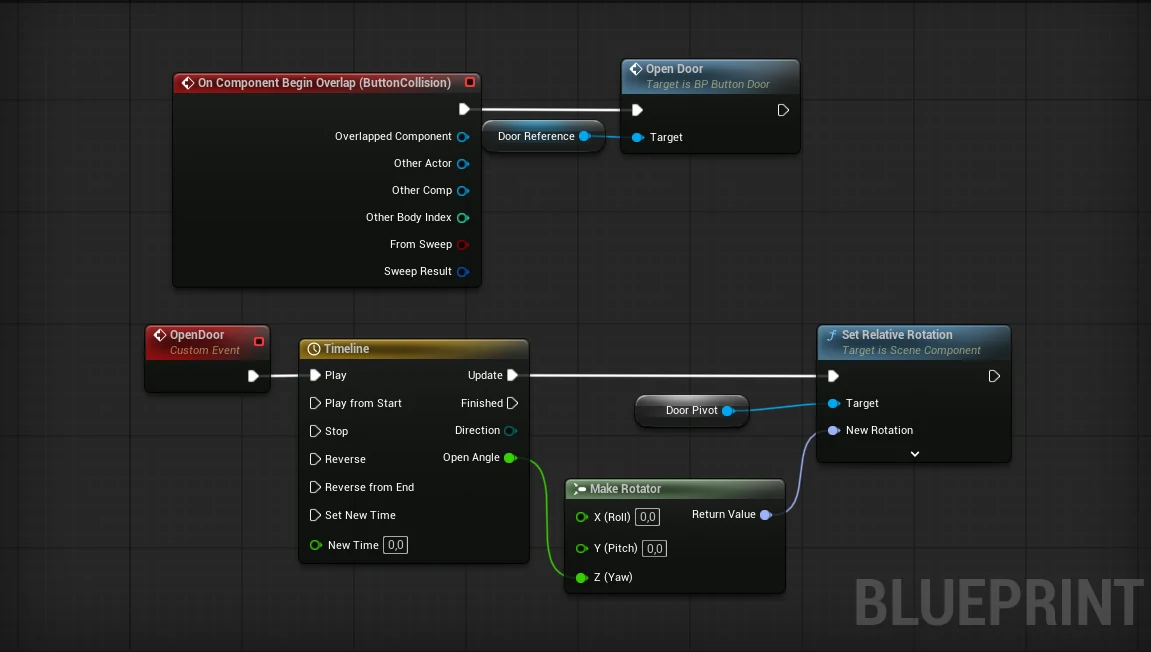
Moving platforms, automatic doors and an elevator use Timelines and relative movement. A button and a separate door communicate through Actor References and Custom Events. Overlap events drive trigger-based interactions.
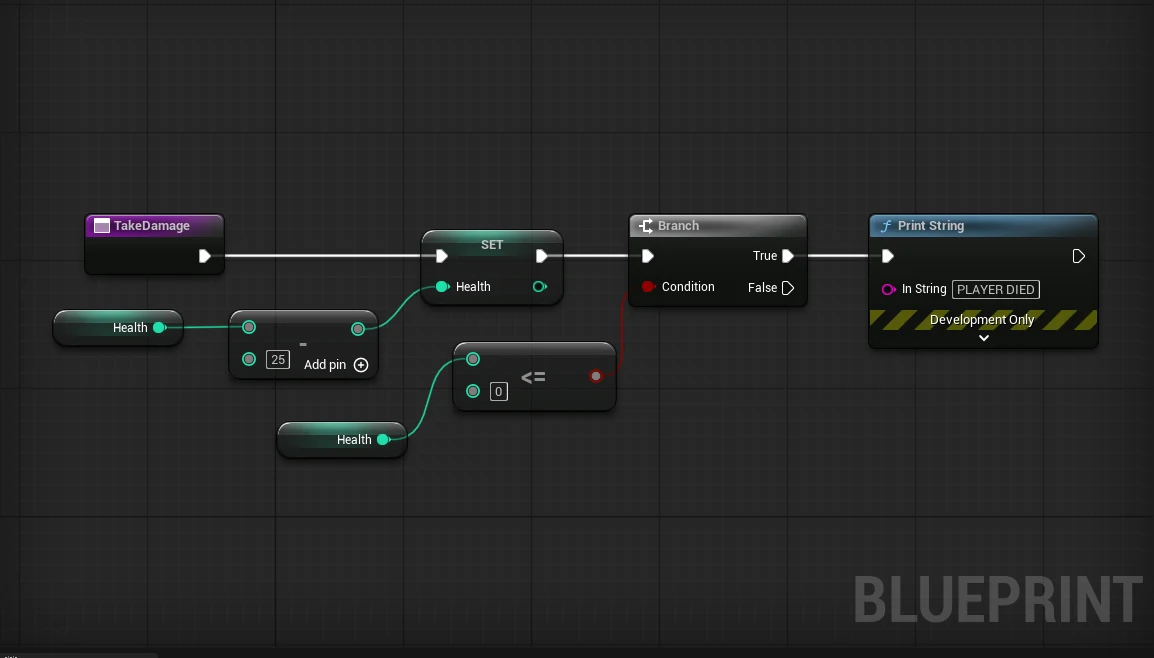
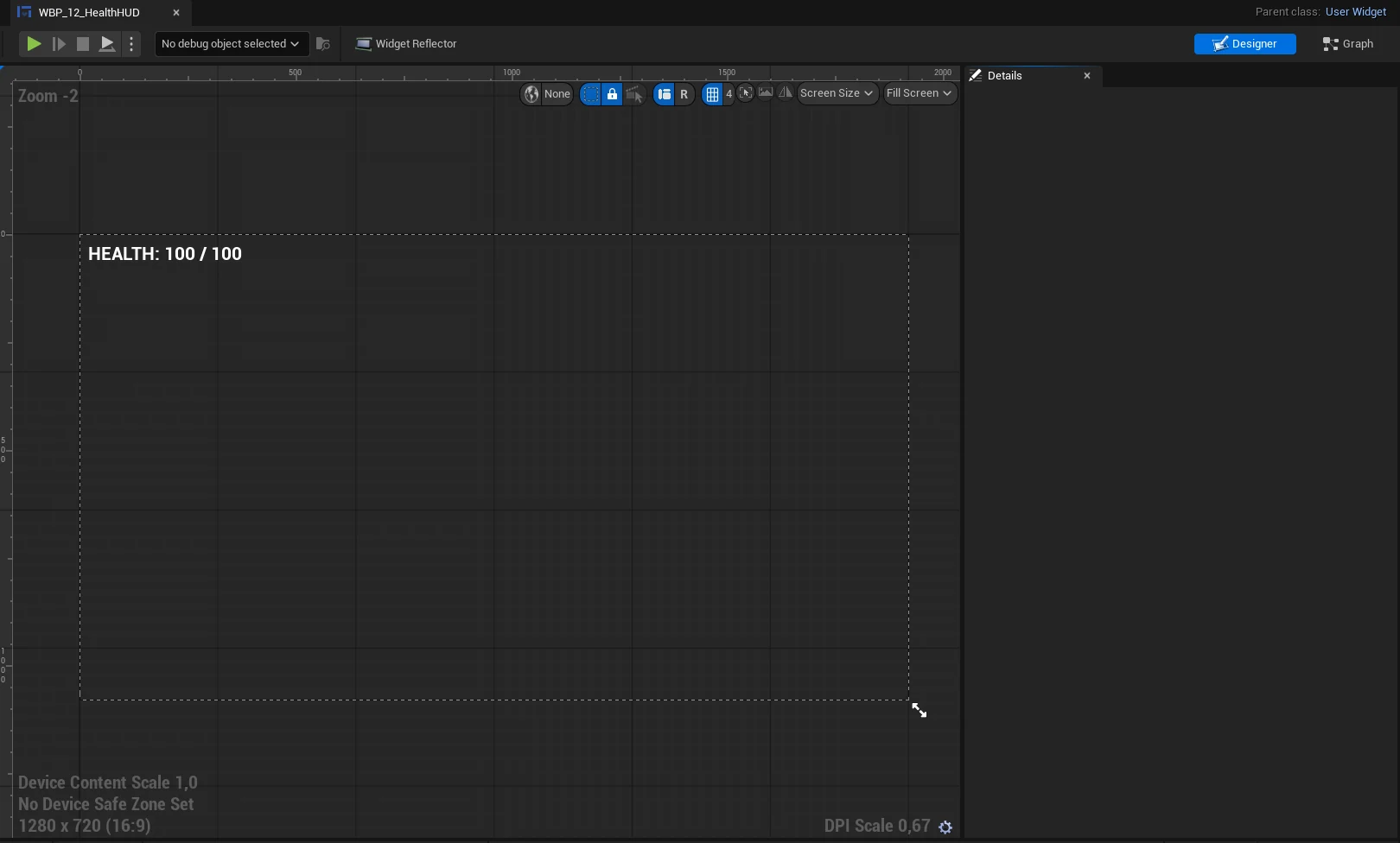
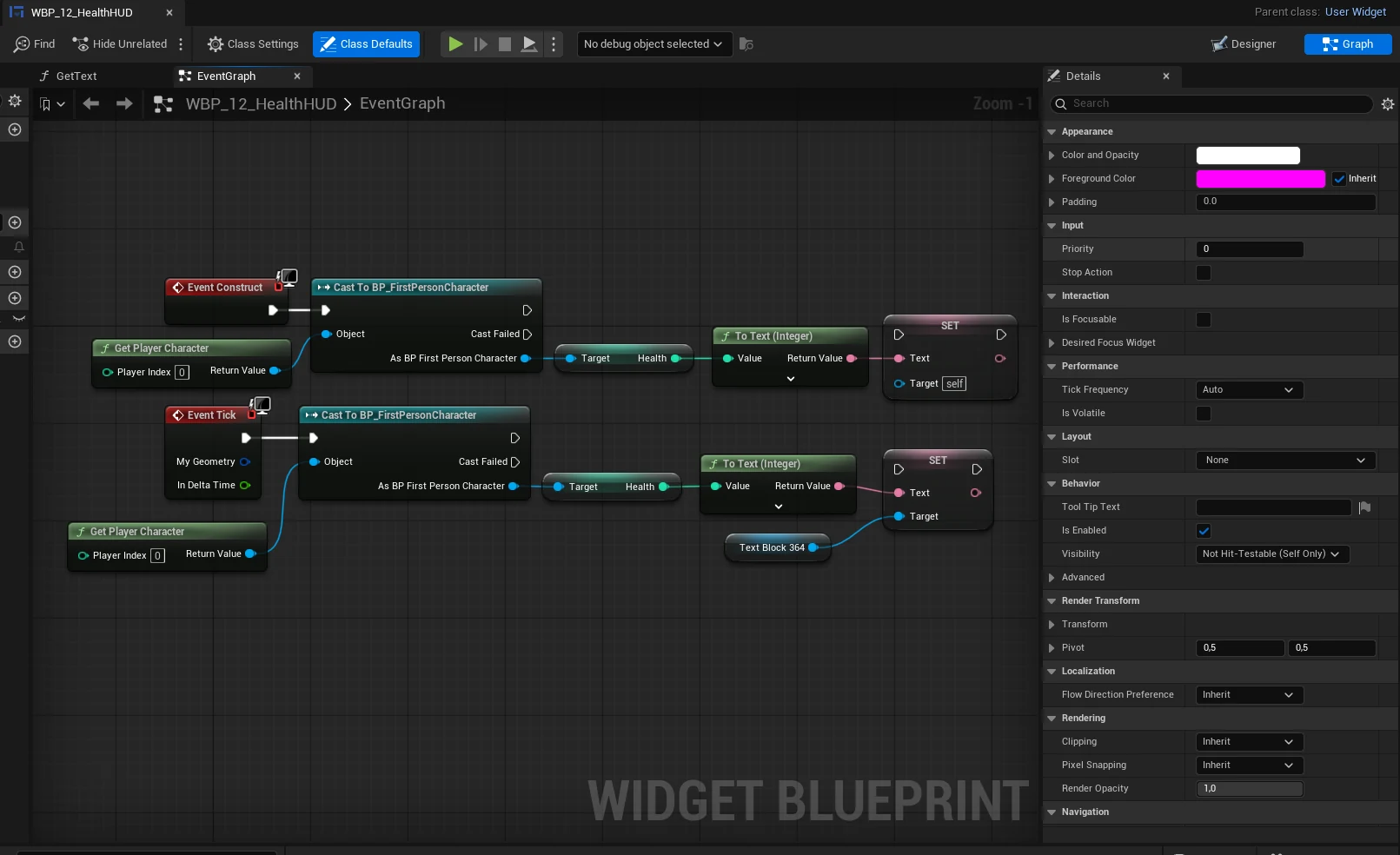
Collision events, variables and conditional checks apply damage and update player health. The health HUD exposes the current value so the player can understand the result of a damage event.
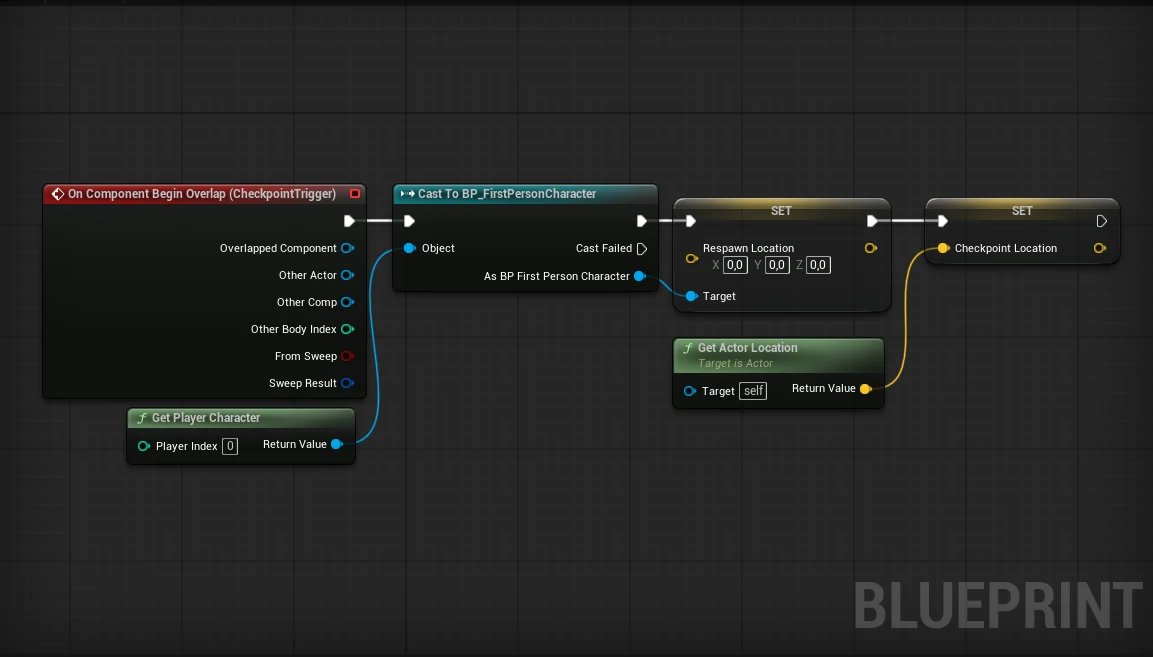
A checkpoint stores a location used to return the player after respawn. BP_FirstPersonCharacter connects this location with movement, health, input and the HUD.
Enhanced Input handles movement, looking, jumping and interaction. A basic UMG widget displays health. The final Mini Gameplay level combines these systems with doors, platforms, collectibles and a goal.
The enemy moves between defined positions using a Timeline. This is a scripted movement exercise; a Navigation or Behaviour Tree AI system is a future improvement.
The original 64-second walkthrough of ButtonCollision, Door Reference, Custom Event and Timeline rotation. Planned validation and overlap filtering are clearly identified as next steps.
Select any image to explore.
Potential improvements include Navigation / Behaviour Trees, richer UI, audio feedback, visual effects and level-design iteration. This project intentionally uses a simple blockout to keep the focus on gameplay fundamentals.
Blueprint exercises and gameplay integration by Lucas Hoelzle, using the Unreal Engine first-person project foundation. This is an independent learning and portfolio project.